


About the Commission

An independent regulatory authority established pursuant to Order No. 65 of 2004 to regulate the media, telecommunications, and information technology sectors in the Republic of Iraq — learn about our origins, our vision, and our institutional structure.

Two decades of independent regulation
in the service of Iraq and its citizens

The Communications and Media Commission (CMC) was established pursuant to Order No. 65 of 2004 as Iraq's first independent regulatory institution dedicated to the media, telecommunications, and information technology sectors. The Commission enjoys full financial and administrative independence and exercises its regulatory and supervisory powers with complete impartiality, free from any political or commercial influence, so as to ensure market fairness and protect the public interest.

The Commission grants licenses to media institutions, telecommunications companies, and digital service providers; manages the national frequency spectrum as a limited sovereign resource; monitors the quality of the services provided to subscribers; sets professional broadcasting rules and follows up on compliance with them; and handles citizens' complaints regarding services and content.

Over more than twenty years, the Commission has established itself as a trusted partner to the state, society, and the private sector, keeping pace with rapid technological change through flexible regulatory frameworks that encourage investment, protect the user, and open the way to a thriving national digital economy.

Order No. 65 of 2004 Financial and administrative independence

Since 2004 — regulation built on trust

Full independence, firm impartiality, and public service for all of Iraq

A regulatory system operating around the clock

From the national operations centre to broadcasting networks and infrastructure across Iraq — a visual tour of the technical landscape the Commission manages to ensure Quality of Service and protect the spectrum resource.

National Operations and Monitoring Centre

Operations centre

National Operations and Monitoring Centre

Round-the-clock monitoring of the frequency spectrum and Quality of Service indicators

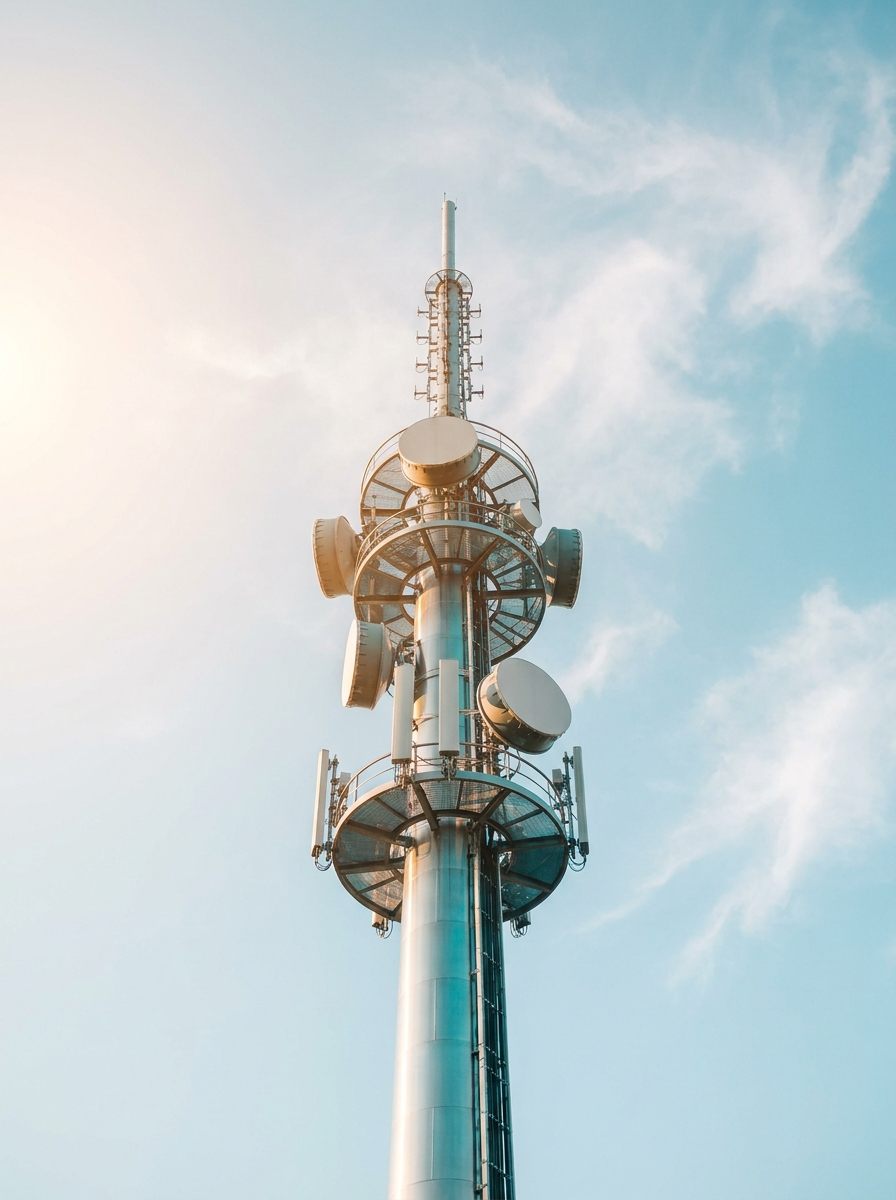
Telecommunications infrastructure

Infrastructure

Transmission and broadcasting networks

Towers and coverage stations serving all governorates

Management of the national frequency spectrum

Frequency spectrum

Management of the national spectrum resource

Allocation and monitoring of frequency bands as a limited sovereign resource

Vision and mission

Our vision

For Iraq to be a leading media and telecommunications environment in the region; where every citizen enjoys easy digital access and high-quality telecommunications services, and where free, professional, and responsible media flourishes, within a modern regulatory framework that fosters innovation, safeguards rights, and strengthens Iraq's standing in the global digital economy.

Our mission

To regulate the media, telecommunications, and information technology sectors with fairness, transparency, and independence; through sound management of the frequency spectrum and national resources, the granting of licenses in accordance with clear professional standards, effective oversight of the quality of services and content, and the protection of users' rights and data, in a way that builds trust, stimulates investment, and serves the course of comprehensive national development.

Strategic objectives

Six overarching goals that govern our annual plans and programmes and translate our vision and mission into tangible impact felt by the citizen, the investor, and the media institution alike.

Fair and transparent regulation

Establishing a clear, publicly declared regulatory framework that ensures fair competition among licensees, prevents monopolistic practices, and publishes decisions and regulations to the public with full transparency.

Protecting the user and data

Safeguarding the rights of subscribers and users through binding standards for Quality of Service and fair billing, and advanced frameworks for protecting personal data and the safety of the national digital space.

Optimal management of the frequency spectrum

Planning and efficiently allocating the national frequency spectrum as a limited sovereign resource, monitoring its uses around the clock, and addressing interference with the latest systems.

Expanding digital access

Delivering telecommunications and internet services to all areas, including rural and underserved regions, at fair prices and reliable quality, embodying the principle of Universal Service.

Keeping pace with digital transformation and supporting investment

Updating regulatory frameworks to keep pace with fifth-generation (5G), the Internet of Things (IoT), and cloud services, and removing obstacles to investment in digital infrastructure and national platforms.

Building national capacities

Investing in Iraqi personnel through continuous training and qualification programmes in regulation, engineering, and cybersecurity, and empowering youth and women in the media and technical sectors.

Institutional structure

A clear institutional hierarchy: a Board of Commissioners that sets policies and issues decisions, and an Executive Body that directs the specialised departments and the Governorate Offices to implement them on the ground.

Head of the Executive Body

Managing the Commission's day-to-day work, implementing the Board's decisions, and overseeing the departments

Telecommunications Regulation Department

Media Regulation Department

Information Technology Department

Legal Department

Administrative and Financial Department

Governorate Offices

Executive Body

The Executive Body manages the Commission's day-to-day work and translates the decisions and policies of the Board of Commissioners into effective programmes and procedures; it oversees the operation of the specialised departments and the Governorate Offices, manages human and financial resources, and follows up on the implementation of annual plans and institutional performance indicators.

The Executive Body also serves as the Commission's interface with government entities, licensed companies, and peer international organisations, and submits periodic reports to the Board on the sector's performance and developments, proposing whatever regulatory updates are needed to keep pace with them.

Some of the Executive Body's activities

22 June 2026

Chairing the periodic meeting of department directors to follow up on the implementation of the annual plan and performance indicators

9 June 2026

A field visit to the southern Governorate Offices to review the readiness of Quality of Service measurement systems

27 May 2026

Receiving a delegation of licensed telecommunications companies to discuss plans for expanding coverage in underserved areas

Executive Body leadershipH

Eng. Haider Salah al-Azzawi

Executive Director of the Communications and Media Commission

A telecommunications engineer with more than twenty years of experience in network planning, frequency spectrum management, and major regulatory projects. He has overseen the national Quality of Service measurement programmes and the Commission's digital transformation portfolio, represented Iraq at forums of the International Telecommunication Union (ITU), and led the teams that prepared the national roadmap for fifth-generation (5G) services.

  • 20+ years of experience in telecommunications engineering and regulation
  • Overseeing the specialised departments and the eighteen Governorate Offices
  • Representing the Commission before the International Telecommunication Union (ITU) and peer bodies

The Commission's indicators

2500+

Valid licenses

Media, telecommunications, and information technology

94%

Complaint processing rate

Within the approved standard timeframes

18

Offices in the governorates

Regulatory coverage across all of Iraq

20+

Years of regulation

Since its establishment pursuant to Order No. 65 of 2004

Meet those who lead regulation and contact us directly

Explore the composition of the Board of Commissioners, its decisions, and its activities, or write to the Commission's team to inquire about services, licenses, and procedures.